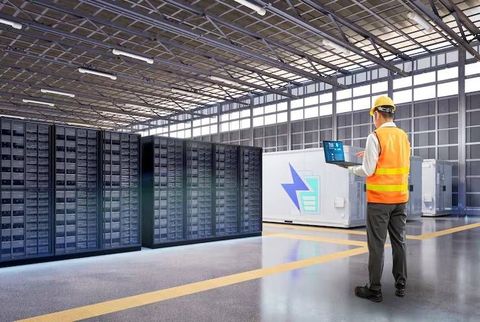
Industrial Warehouse Robotics Automation: Insights Into Modern Warehouse Operations
Industrial warehouse robotics automation is reshaping how goods move through modern distribution and storage facilities.
Robots can support repetitive handling, transport, picking, sorting, storage, and inventory tasks while working alongside software systems that coordinate warehouse activity.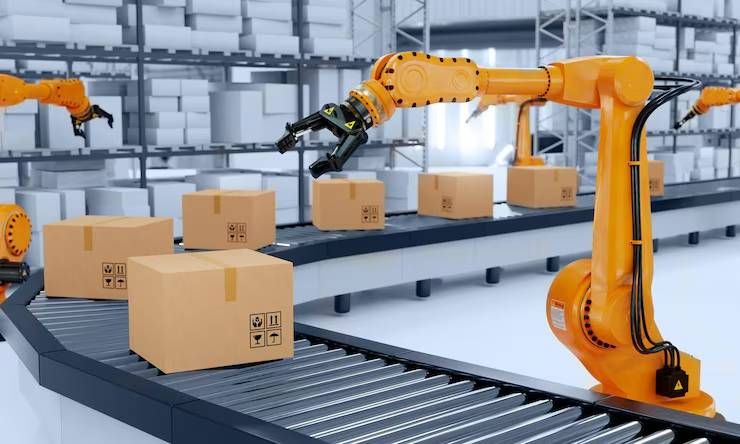
The growing complexity of warehouse operations has made automation increasingly relevant. Facilities may handle larger product ranges, faster order cycles, tighter inventory requirements, and continuous material movement, creating demand for systems that can coordinate physical work with real-time operational information.
Understanding warehouse robotics requires looking beyond individual machines. The effectiveness of an automated facility depends on how robots, warehouse software, sensors, storage infrastructure, workers, and material-flow processes operate together.
How Robotics Fits Into Warehouse Operations
Warehouse robotics is not a single technology. It describes a range of automated machines designed to perform specific physical tasks within a warehouse environment.
Some robots move goods between locations, while others assist with picking, sorting, pallet handling, or storage retrieval. Their roles depend on warehouse layout, product characteristics, order profiles, and the level of automation required.
Modern systems commonly combine robotics with a warehouse management system (WMS) and warehouse control or execution software. The WMS manages inventory and order information, while control systems can coordinate equipment and direct physical movement.
This integration creates a connection between digital warehouse planning and physical material handling. Instead of treating each machine as an isolated piece of equipment, automation can be organized as part of a larger operational workflow.
The Main Robotic Systems Used in Warehouses
Different warehouse environments require different forms of robotic movement. The appropriate technology depends heavily on what is being transported and how frequently it must move.
Automated guided vehicles (AGVs) generally follow predefined routes using technologies such as magnetic guidance, markers, reflectors, or mapped navigation systems. They are commonly used for repetitive transportation between established locations.
Autonomous mobile robots (AMRs) use sensors, software, and mapping capabilities to navigate dynamic environments. They can adjust routes when obstacles or changing warehouse conditions affect their path.
Robotic arms are useful for tasks such as palletizing, depalletizing, picking, packing, and handling products. Their effectiveness depends on factors such as reach, payload, tooling, and the consistency of the objects being handled.
Automated storage and retrieval systems (AS/RS) combine storage structures, automated equipment, and software to place and retrieve inventory. Depending on the configuration, these systems can use cranes, shuttles, lifts, or robotic vehicles.
The technologies can operate independently, but larger facilities often combine several systems to create a coordinated material-handling environment.
How Automated Material Flow Is Coordinated
A warehouse robot does not simply receive an instruction to move randomly around a building. Its activity is normally part of a sequence of operational decisions.
An order may create a requirement for inventory to be retrieved. Warehouse software determines where the inventory is located and what process should be used to move it. A robot or automated storage system then receives an appropriate task.
Once the physical movement begins, sensors and control software help track progress. The system may update inventory records, assign the next task, or redirect equipment according to current conditions.
This coordination becomes particularly important when multiple robotic systems operate simultaneously. Traffic management, task prioritization, charging requirements, storage locations, and human work areas all need to be considered.
Sensors and Navigation Make Automation More Flexible
Modern warehouse robots rely heavily on sensors. Cameras, lidar, proximity sensors, encoders, and other detection technologies can help machines understand their surroundings and respond to changing conditions.
Navigation systems allow mobile robots to determine their position and select appropriate routes. In environments where people, forklifts, pallets, and other equipment share space, the ability to detect obstacles is particularly important.
Sensors also support operational monitoring. A robot can provide information about its location, movement, battery condition, task progress, or equipment status.
This data can become valuable when connected to warehouse management and analytics systems. Operators can use it to identify bottlenecks, monitor equipment utilization, and understand where operational adjustments may be needed.
Why Warehouse Layout Matters
Automation works within a physical environment, so warehouse design has a direct effect on robotic performance.
A facility must provide appropriate pathways, storage positions, charging areas, safety zones, and access points. The placement of racks, conveyors, workstations, and human activity areas can influence how efficiently robots move through the building.
Layout decisions also affect scalability. A system designed around a particular traffic pattern may require additional planning when storage capacity or product volume changes.
For this reason, robotics projects often involve more than selecting machines. Engineers and warehouse planners must consider material flow from receiving through storage, picking, packing, staging, and shipping.
Integrating Robots With Human Workers
Warehouse robotics does not necessarily mean removing people from the operation. Many modern facilities use collaborative workflows in which robots handle transportation or repetitive movement while workers perform tasks requiring judgment, inspection, exception handling, or specialized handling.
For example, an AMR may transport shelves, totes, or containers to a workstation. A worker can then complete the picking activity while the robot handles movement between locations.
This arrangement can reduce unnecessary walking and allow employees to focus on tasks that are difficult to automate completely. It also creates new operational responsibilities involving robot supervision, system monitoring, maintenance, and exception management.
Safety becomes a central consideration whenever humans and automated equipment share working areas. Physical separation, sensors, speed controls, designated zones, emergency procedures, and appropriate risk assessments all contribute to safe operation.
Data Turns Robotics Into an Operational System
The value of warehouse robotics increasingly depends on the information exchanged between machines and software.
Real-time operational data can show where inventory is located, which tasks are pending, how equipment is being used, and where congestion is developing. This creates opportunities for more responsive warehouse management.
Digital integration can also support predictive maintenance. Equipment condition data may reveal abnormal behavior before a failure interrupts operations.
Analytics can help identify recurring bottlenecks as well. If robots repeatedly encounter congestion in a particular area, the issue may be related to layout, task scheduling, storage allocation, or traffic rules rather than robot performance itself.
This is why automation should be evaluated as an operational system rather than simply as a collection of machines.
Challenges That Influence Automation Performance
Warehouse robotics can improve consistency and material flow, but implementation involves several practical challenges.
Existing facilities may have uneven floors, narrow aisles, changing storage configurations, or infrastructure that was never designed for autonomous equipment. Integrating new robotics with legacy warehouse systems can also require significant technical coordination.
Product variability creates another challenge. Robots generally perform more predictably when products have consistent dimensions, weights, packaging, and handling characteristics. Highly variable inventory may require advanced perception systems or more flexible robotic tooling.
Maintenance and operational support also remain necessary. Sensors need to function correctly, mechanical components require inspection, batteries need management, and software must remain synchronized with the broader warehouse environment.
A well-designed automation system therefore includes procedures for exceptions rather than assuming that every warehouse movement will proceed normally.
Building a Scalable Robotics Strategy
Successful warehouse automation usually begins with the operational problem rather than the machine.
Before introducing robotics, operators need to understand where time is being spent, where material movement creates delays, which processes are repetitive, and where errors or congestion occur.
The most suitable automation approach may combine several technologies rather than relying on one robotic platform. A facility might use mobile robots for transportation, robotic arms for pallet handling, conveyors for fixed movement, and automated storage equipment for high-density inventory.
Scalability should also be considered from the beginning. Warehouse requirements can change as product ranges, order patterns, storage capacity, and fulfillment processes evolve.
A flexible architecture makes it easier to introduce additional equipment or modify workflows without redesigning the entire operation.
Frequently Asked Questions
What is industrial warehouse robotics automation?
Industrial warehouse robotics automation uses robotic machines, sensors, software, and material-handling equipment to automate tasks such as transportation, storage, picking, sorting, and pallet handling.
What is the difference between an AGV and an AMR?
AGVs typically follow predefined routes or guidance systems, while AMRs can use mapping and onboard sensing to navigate more dynamically and adjust their routes around obstacles.
Can warehouse robots work alongside employees?
Yes. Many systems are designed for human-robot collaboration. Robots can handle transportation or repetitive activities while workers perform picking, inspection, decision-making, and exception handling.
Does warehouse automation eliminate the need for workers?
Not necessarily. Automation often changes the nature of warehouse work rather than removing every human role. Workers may continue to manage exceptions, supervise systems, maintain equipment, and perform tasks that require judgment.
What determines whether a warehouse is suitable for robotics?
Important factors include warehouse layout, inventory characteristics, order patterns, material flow, software infrastructure, safety requirements, and the consistency of repetitive tasks.
Conclusion
Industrial warehouse robotics automation connects physical material movement with software-driven operational control. Mobile robots, robotic arms, automated storage systems, sensors, and warehouse software can work together to coordinate increasingly complex warehouse environments.
The strongest automation strategy begins with understanding the operation itself. When robotics is matched to the right workflows, supported by suitable infrastructure, and integrated with reliable data and safety processes, it can become a practical part of modern warehouse management rather than simply an isolated technology investment.

Related Post...

AI Vision Systems: Discover Core Technologies Behind Visual Inspection
Updated: October 06, 2026
Read More
Cloud Call Center Systems: Explore How Cloud-Based Communication Works
Updated: October 02, 2026
Read More
Industrial Fire Suppression System Inspection: A Guide to Equipment Readiness
Updated: October 02, 2026
Read More