Dedicated Enterprise Secure Fiber Leased Lines: Explore Modern Network Architecture
Enterprise networks increasingly depend on predictable connectivity between offices, data centers, cloud environments, and critical business systems.
Dedicated enterprise secure fiber leased lines provide a private connectivity path designed around consistent performance, controlled access, and dependable communication between defined locations.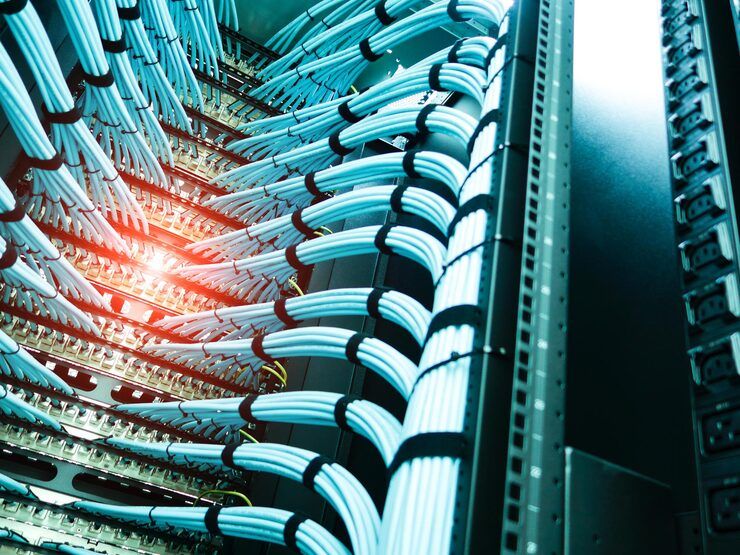
Unlike shared internet access, a dedicated fiber connection is provisioned for a specific organization and can support business traffic without relying on the same access model used by residential or general-purpose connections. This makes the architecture relevant to organizations handling voice, video, cloud applications, centralized systems, and large volumes of business data.
Understanding how these networks are structured requires looking beyond the fiber cable itself. Physical infrastructure, optical equipment, routing, redundancy, traffic protection, monitoring, and service-level requirements all contribute to the overall network architecture.
Why Dedicated Fiber Changes Enterprise Connectivity
Traditional enterprise connectivity often combines several technologies, including broadband, private circuits, virtual private networks, wireless links, and cloud connectivity. Each serves a different purpose, but critical workloads may require a more predictable underlying connection.
A dedicated fiber leased line creates a point-to-point or managed private connection between designated endpoints. The physical fiber infrastructure provides high-capacity transmission, while the network equipment at each end manages how traffic enters and leaves the enterprise environment.
The dedicated nature of the connection can make network behavior easier to engineer. Organizations can design routing policies, traffic prioritization, security controls, and redundancy around known network paths rather than treating connectivity as a general shared access service.
Fiber also provides strong physical transmission characteristics over long distances. Its high bandwidth potential allows the same underlying medium to support demanding enterprise applications as network requirements grow.
How a Secure Fiber Network Is Structured
A modern enterprise fiber architecture typically contains several layers rather than a single connection.
At the physical layer, fiber-optic cabling connects business premises, carrier facilities, data centers, or other network locations. Optical transceivers and network interfaces convert electrical network signals into optical signals and back again.
Above the physical connection, Ethernet or other networking protocols transport enterprise traffic. Routers and switches determine how packets move between internal networks, remote sites, cloud environments, and external destinations.
Security controls operate around these connectivity layers. Firewalls, access-control policies, encryption mechanisms, network segmentation, and authentication systems can restrict which systems communicate and how traffic is handled.
This layered architecture allows connectivity and security to be managed as related but distinct functions. A dedicated circuit provides the transport path, while enterprise security infrastructure determines how that path is used.
Designing Connectivity Between Business Locations
A common deployment connects headquarters, branch offices, manufacturing facilities, data centers, or other corporate locations.
The architecture can be designed as a point-to-point connection when only two locations need direct communication. Larger organizations may use multiple circuits and routing technologies to create a broader private network.
For example, a company with several regional offices may connect each location to centralized infrastructure rather than creating an isolated connection for every possible pair of sites. The appropriate topology depends on traffic patterns, application requirements, geographic distribution, and resilience objectives.
Network architects also need to determine where routing intelligence should reside. Some environments centralize routing through core facilities, while others use distributed routing to provide more direct paths between locations.
Integrating Fiber Leased Lines With Cloud Networks
Modern enterprise traffic does not remain inside corporate offices. Business applications increasingly operate across private data centers, public cloud platforms, software-as-a-service environments, and hybrid infrastructure.
A dedicated fiber connection can therefore become part of a larger hybrid network architecture. The circuit may connect a corporate location to a data center or network facility that provides controlled access to cloud environments.
The important architectural question is not simply whether a company has a fiber connection. It is how that connection fits into the complete traffic path.
Network teams need to understand where applications are hosted, where users connect, how data is routed, and where security inspection occurs. Poorly designed routing can create unnecessary latency or concentrate traffic at a single point of failure.
Security Architecture Around Private Connectivity
A dedicated connection should not be treated as inherently secure simply because it is private. Physical isolation can reduce exposure to some forms of shared-network traffic, but enterprise security still requires deliberate controls.
Firewalls can inspect traffic entering and leaving protected network zones. Network segmentation can separate departments, applications, production systems, guest environments, and sensitive infrastructure.
Encryption may also be appropriate depending on the sensitivity of the information and the organization's security architecture. Authentication and access policies provide additional controls over which devices and users can reach particular systems.
A strong design therefore combines dedicated transport with layered security rather than assuming the network circuit itself provides complete protection.
Building Redundancy Into the Architecture
A single fiber circuit can become a critical dependency if an organization relies on it for essential applications. A physical fiber cut, equipment failure, power problem, or upstream network issue can interrupt connectivity.
For this reason, resilient enterprise designs often use more than one connectivity path.
Redundancy can involve:
- Physically diverse fiber routes
- Secondary circuits from separate network paths
- Independent edge devices
- Dual power arrangements
- Automated routing failover
- Backup wireless or cellular connectivity
Physical diversity is particularly important. Two circuits may appear redundant while still passing through the same conduit, building entrance, or carrier infrastructure. If both paths share the same physical risk, the actual resilience may be much lower than expected.
Bandwidth, Latency, and Traffic Engineering
Enterprise network performance is not determined by bandwidth alone. Latency, packet loss, jitter, congestion, and route stability can affect application performance.
Real-time applications such as voice and interactive video are sensitive to latency and jitter. Large data transfers may depend more heavily on sustained throughput. Transactional applications can be affected by both network delay and packet loss.
Traffic engineering allows organizations to prioritize important workloads and manage how network capacity is used. Quality-of-service policies can help differentiate latency-sensitive traffic from less time-critical transfers.
The architecture should therefore be based on actual traffic patterns rather than simply selecting a large capacity and assuming that every application will perform equally well.
Monitoring and Operational Management
Dedicated enterprise connectivity requires ongoing visibility. Network teams need to know whether circuits, interfaces, routing protocols, and connected devices are functioning normally.
Monitoring can track characteristics such as interface utilization, latency, packet loss, errors, availability, and link status. Alerts can identify abnormal behavior before it becomes a significant operational problem.
Performance data also helps with capacity planning. If utilization consistently approaches the limits of a circuit, administrators can evaluate whether traffic needs to be optimized or whether additional capacity is appropriate.
Documentation is equally important. Network diagrams should identify circuit endpoints, routing relationships, physical paths, security boundaries, and failover mechanisms. Without accurate documentation, troubleshooting complex enterprise networks becomes considerably more difficult.
Where Service-Level Requirements Fit
Enterprise connectivity is often associated with formal service-level commitments covering characteristics such as availability, fault response, restoration procedures, and performance measurements.
These requirements should be evaluated alongside the technical architecture rather than treated as a separate administrative matter.
For a business operating critical applications, a connectivity design may require defined escalation procedures and documented recovery expectations. The actual requirements depend on application criticality and organizational risk tolerance.
A highly available architecture should also account for what happens beyond the primary leased line. If the circuit remains available but the organization's router, firewall, power system, or internal network fails, the external connectivity commitment does not prevent the internal outage.
How Modern Enterprise Architectures Are Evolving
Dedicated fiber remains relevant even as organizations adopt software-defined networking, cloud platforms, zero-trust security models, and distributed applications.
Modern architectures increasingly treat connectivity as one component of a broader network fabric. Dedicated circuits may coexist with internet-based connectivity, encrypted tunnels, cloud interconnects, and software-defined routing.
This hybrid approach allows organizations to select different connectivity methods according to application requirements. Critical traffic can use controlled private paths, while other workloads may use alternative connectivity where appropriate.
The result is a network architecture that focuses less on having one universal connection and more on designing predictable, secure paths for different categories of business traffic.
Frequently Asked Questions
What is a dedicated enterprise fiber leased line?
It is a dedicated telecommunications connection that provides a defined connectivity path between specified enterprise locations or network endpoints using fiber-optic infrastructure.
Is a fiber leased line automatically secure?
No. A dedicated connection provides controlled connectivity, but security still requires appropriate firewalls, segmentation, access controls, monitoring, and encryption where necessary.
Why is physical route diversity important?
Two circuits can still share the same physical infrastructure. If they follow the same conduit or fiber route, a single physical incident could disrupt both connections.
Can leased fiber connect an enterprise to cloud infrastructure?
Yes. A fiber connection can form part of a hybrid architecture connecting enterprise locations with data centers, cloud connectivity facilities, or other network environments.
What should enterprises monitor on a dedicated fiber connection?
Common metrics include availability, latency, packet loss, bandwidth utilization, interface errors, routing status, and failover behavior.
Conclusion
Dedicated enterprise secure fiber leased lines provide a predictable connectivity foundation for organizations that depend on reliable communication between important network locations. Their value comes from the complete architecture rather than the fiber cable alone.
Effective designs combine dedicated transport with routing, security controls, redundancy, monitoring, and carefully planned traffic management. As enterprise environments become more distributed across offices, data centers, and cloud platforms, fiber connectivity increasingly serves as one component of a broader, resilient network architecture.

Related Post...
Commercial Battery Storage Systems: Explore How Factory Energy Storage Works
Updated: October 02, 2026
Read More
Corporate Unified Virtual PABX Architectures: Explore Modern Call Routing
Updated: October 06, 2026
Read More
Enterprise Omni-Channel Call Grid Deployments: Insights Into Scalable Call Networks
Updated: October 06, 2026
Read More