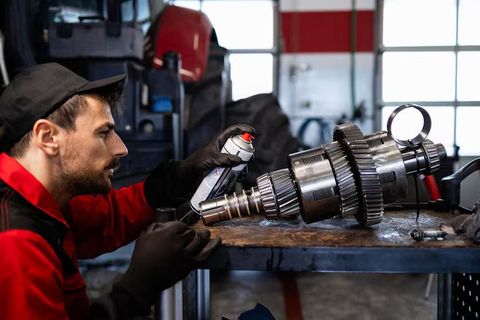
Industrial Spare Parts Guide to Bearings, Belts and Machine Components
Industrial machinery depends on thousands of individual parts working together under demanding conditions.
Industrial spare parts keep these systems functioning when components wear, become damaged, or reach the end of their useful operating life. Bearings, belts, seals, gears, couplings, and other machine components each perform specific mechanical functions that directly affect equipment reliability.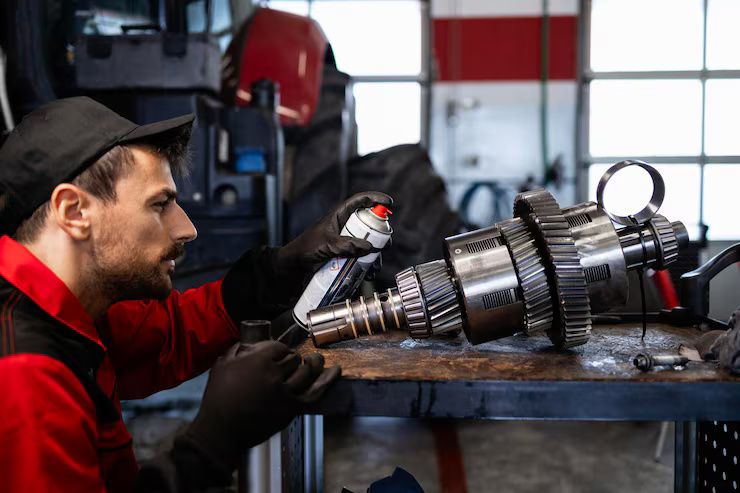
Production environments place continuous demands on these parts. Rotating shafts, conveyor systems, pumps, compressors, motors, and automated machinery can operate for long periods while exposed to vibration, heat, dust, moisture, pressure, and mechanical loads.
Understanding the purpose and characteristics of common industrial spare parts helps maintenance teams, engineers, and production managers make better decisions about equipment upkeep. It also provides a clearer view of how relatively small components can influence the performance of an entire machine.
Why Industrial Spare Parts Matter to Machinery Performance
Industrial machinery is rarely affected by the failure of one component alone. A worn bearing can increase shaft vibration, while a deteriorated belt can affect transmission efficiency or interrupt material movement. Small mechanical problems can therefore develop into broader equipment issues when they are not identified early.
Spare parts support maintenance planning by allowing worn components to be replaced according to established maintenance procedures. This approach helps equipment remain within expected operating conditions and reduces the likelihood that a minor defect will progress into a major mechanical problem.
Part compatibility is equally important. Dimensions, load ratings, operating temperatures, materials, tolerances, and installation requirements must match the original equipment specifications. A component that appears physically similar may perform differently if its technical characteristics are unsuitable.
Bearings Control Friction and Support Movement
Bearings are among the most widely used industrial components because they support rotating or moving parts while controlling friction. They are found in electric motors, pumps, gearboxes, conveyors, fans, machine tools, and many other systems.
A bearing typically supports a shaft while allowing controlled rotation. Depending on the application, it may need to accommodate radial loads, axial loads, or a combination of both.
Common bearing categories include:
- Ball bearings for general rotational applications
- Roller bearings for higher load conditions
- Tapered roller bearings for combined radial and axial loads
- Needle bearings where installation space is limited
- Thrust bearings for primarily axial loading
Bearing performance depends on factors such as lubrication, alignment, contamination, load, speed, and temperature. Excessive noise, rising temperatures, unusual vibration, or visible wear can indicate developing problems.
Proper lubrication is particularly important. Too little lubricant can increase friction and heat, while excessive or unsuitable lubrication can also affect performance.
Belts Transfer Power Between Components
Belts provide another fundamental role in industrial machinery by transmitting rotational power from one shaft or pulley to another. They are commonly found in conveyors, ventilation systems, processing equipment, packaging machinery, and manufacturing lines.
Different applications require different belt designs. V-belts use a wedge-shaped profile to transfer power through pulley grooves, while timing belts use teeth to maintain synchronized movement. Flat belts are used in applications where specific speed and transmission characteristics are required.
Belt condition can influence the efficiency and stability of the entire drive system. Misalignment, incorrect tension, contamination, cracking, glazing, or excessive stretching may indicate that maintenance is required.
Unlike some rigid transmission systems, belts can also absorb a degree of vibration and provide relatively quiet power transmission. Their suitability depends on the machine's speed, torque, operating environment, and alignment requirements.
Gears and Couplings Manage Mechanical Transmission
Gears transfer rotational movement while changing speed, torque, or direction. They are central to gearboxes and reduction systems used across manufacturing, material handling, transportation, and process industries.
Spur, helical, bevel, and worm gears each have different operating characteristics. Helical gears, for example, are often selected when smoother engagement is desirable, while bevel gears are used when power transmission needs to change direction.
Couplings connect shafts and transmit torque between rotating components. Flexible couplings can accommodate limited misalignment and help reduce shock or vibration between connected equipment.
Gear and coupling problems can develop through poor lubrication, alignment errors, overloads, fatigue, or contamination. Regular inspection can identify wear patterns before they significantly affect machine performance.
Seals Protect Critical Mechanical Systems
Seals often receive less attention than bearings or gears, yet they are essential for keeping lubricants inside equipment and contaminants outside.
Industrial seals are used in pumps, hydraulic cylinders, gearboxes, compressors, rotating shafts, and many other assemblies. Their purpose may involve preventing oil leakage, restricting dust and moisture, or maintaining pressure within a system.
Common types include oil seals, mechanical seals, O-rings, and gasket materials. Selection depends on the fluid involved, pressure, temperature, movement, and surrounding environment.
A damaged seal can create several problems simultaneously. Fluid leakage may affect lubrication, contamination can enter the machine, and repeated exposure to unsuitable chemicals or temperatures can accelerate deterioration.
Filters and Wear Components Support Equipment Protection
Filters are another important category of industrial spare parts. They remove unwanted particles or contaminants from air, oil, fuel, hydraulic fluid, and process streams.
Keeping filtration systems in appropriate condition protects sensitive components from abrasive particles and contamination. A blocked filter, however, can restrict flow and increase pressure within a system, making correct maintenance intervals important.
Wear components also require regular attention. Conveyor rollers, chains, sprockets, cutting edges, bushings, liners, and similar parts may gradually change shape or surface condition through continuous use.
These components are designed to handle specific forms of mechanical wear, but their operating environment strongly influences how long they remain effective.
How to Select the Correct Spare Part
Selecting an industrial spare part should begin with the technical requirements of the equipment rather than appearance alone.
Important identification information may include the original part number, equipment model, component dimensions, material specification, load requirements, operating speed, and environmental conditions.
Maintenance records can also reveal useful information. Repeated failures may indicate that the replacement component is not the underlying problem. Excessive load, shaft misalignment, contamination, incorrect installation, or an unsuitable operating condition may be contributing to the failure.
For critical equipment, maintaining accurate component records simplifies future maintenance and helps ensure that replacement parts remain consistent with the machine's engineering requirements.
Maintenance Practices That Extend Component Life
Spare parts management works best when supported by condition monitoring and preventive maintenance. Inspection schedules should reflect the type of machinery, operating environment, duty cycle, and consequences of failure.
Visual inspections can identify cracks, corrosion, leakage, belt deterioration, or loose connections. More advanced approaches may use vibration analysis, thermal monitoring, oil analysis, or other condition-based techniques to detect developing mechanical problems.
Storage conditions also matter. Bearings, seals, belts, and other components can deteriorate before installation if exposed to excessive humidity, temperature fluctuations, contamination, or prolonged ultraviolet exposure.
Proper labeling and controlled storage help preserve component condition while making critical parts easier to identify when maintenance is required.
The Relationship Between Spare Parts and Reliability
Industrial reliability is influenced by the interaction of many components rather than the performance of one part in isolation. A high-quality bearing can still experience premature failure if a shaft is misaligned. A properly specified belt may deteriorate quickly when exposed to an unsuitable chemical environment.
This is why maintenance teams increasingly treat spare parts as part of a broader reliability strategy. Component condition, operating conditions, installation practices, lubrication, alignment, and inspection frequency all contribute to equipment performance.
Understanding these relationships makes maintenance more predictive and helps teams investigate recurring failures instead of simply replacing the same component repeatedly.
Frequently Asked Questions
What are industrial spare parts?
Industrial spare parts are replacement components used to restore or maintain machinery and production equipment. They can include bearings, belts, gears, seals, filters, chains, couplings, rollers, and specialized machine components.
How can you tell when a bearing needs attention?
Common warning signs include unusual noise, increased vibration, excessive heat, rough rotation, or signs of lubricant deterioration. The exact symptoms depend on the bearing type and operating environment.
What causes industrial belts to fail?
Belt problems can result from incorrect tension, pulley misalignment, excessive loading, contamination, temperature exposure, material deterioration, or improper installation.
Why are seals important in industrial machinery?
Seals help prevent lubricants and process fluids from escaping while restricting contaminants such as dust, moisture, or debris from entering critical assemblies.
How should industrial spare parts be stored?
Components should generally be protected from contamination, excessive humidity, extreme temperatures, and other environmental conditions that could degrade their materials before installation. Manufacturers' storage requirements should take priority.
Conclusion
Industrial spare parts are fundamental to maintaining reliable machinery and continuous production. Bearings support controlled movement, belts transmit power, gears manage speed and torque, seals protect internal systems, and filters help control contamination. Each component has a specific purpose, but its performance also depends on surrounding operating conditions.
Effective spare parts management therefore involves more than keeping replacements available. Accurate component identification, appropriate storage, preventive inspection, correct installation, and condition monitoring all contribute to longer equipment life and more predictable maintenance. Understanding how these machine components function gives industrial teams a stronger foundation for maintaining safe, efficient, and dependable production systems.

Related Post...
Precision CNC Milling Machines: Explore Aerospace Calibration Methods
Updated: August 26, 2026
Read More
Structural Engineering Requirements: A Guide to Large-Scale Material Haulers
Updated: August 26, 2026
Read More
Commercial Pressure Washer Pump Insights for Choosing Reliable Components
Updated: July 24, 2026
Read More