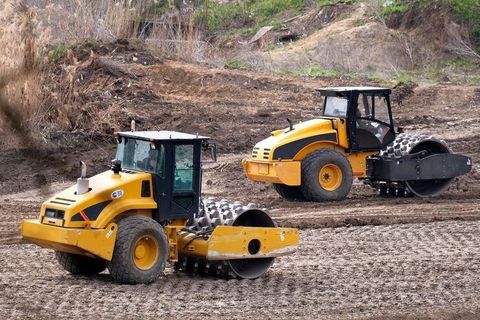
Structural Engineering Requirements: A Guide to Large-Scale Material Haulers
Large-scale material haulers operate under demanding structural conditions.
Their frames, chassis, bodies, suspension systems, and load-bearing connections must withstand substantial forces while maintaining stability across changing terrain and operating conditions. Structural engineering requirements therefore play a central role in determining how these machines perform in demanding industrial environments.
The engineering challenge extends beyond supporting a large payload. Material haulers experience repeated loading, vibration, impact, braking forces, torsional movement, and uneven weight distribution. These factors can gradually affect structural components if they are not properly considered during design, manufacturing, and inspection.
Understanding the structural principles behind these vehicles helps explain why material selection, load analysis, fatigue assessment, stability calculations, and connection design are essential. It also provides useful context for evaluating how large-scale haulers are engineered for durability, operational reliability, and safe load handling.
How Structural Loads Shape Hauler Design
A large material hauler must transfer forces through a carefully coordinated structural system. The payload creates vertical loading, while acceleration, braking, turning, and uneven ground introduce additional horizontal and torsional forces.
Engineers typically evaluate the complete load path from the material body through the frame, suspension, axles, and supporting structures. Each component must carry its expected share of the load without excessive deformation or localized stress concentration.
Static loading is only one part of the assessment. Dynamic loads can become significantly more demanding when a heavily loaded vehicle travels over rough terrain, encounters obstacles, or changes direction. Structural calculations therefore need to account for realistic operating conditions rather than relying solely on idealized stationary loading.
Material Selection and Structural Strength
Material selection directly influences the strength, weight, fatigue performance, and manufacturability of a hauler structure. High-strength steels are commonly considered for major load-bearing components because they can provide substantial strength without requiring excessively heavy sections.
However, higher strength does not automatically mean better structural performance. Engineers must consider ductility, weldability, fracture resistance, fatigue behavior, corrosion characteristics, and the intended manufacturing process.
A lightweight structure can improve vehicle efficiency and payload utilization, but reducing material without understanding load paths can create vulnerable areas. Structural optimization therefore requires balancing mass reduction with stiffness, strength, durability, and manufacturability.
Frame Design and Load Distribution
The main frame functions as the backbone of a large material hauler. It transfers forces between the payload structure, suspension system, powertrain-related supports, and other major assemblies.
Frame geometry must account for bending and torsion while maintaining sufficient rigidity. Long structural members can experience substantial bending under distributed loads, while cross-members help control lateral movement and maintain overall structural integrity.
Torsional stiffness is particularly important when vehicles operate on uneven surfaces. If one wheel or axle encounters a different elevation from another, the frame can experience twisting. Poorly controlled torsional movement may increase stress around joints, mounting points, and welded connections.
Payload Body and Connection Design
The material body must withstand both the weight of its contents and the forces generated during loading, transportation, and unloading. Its geometry influences how material is distributed and how loads reach the supporting frame.
Connection points between the body and chassis require careful engineering because they can experience concentrated forces. Reinforcement around mounting areas may be necessary to prevent localized deformation or fatigue damage.
The body must also accommodate operational movement. A structure that is excessively rigid in one area but poorly supported elsewhere can create uneven stress distribution. Engineers therefore consider the interaction between the body, frame, hinges, supports, and hydraulic mechanisms when evaluating the complete structural system.
Fatigue and Repeated Loading
Fatigue is one of the most important structural considerations for large material haulers. Unlike a one-time static load, repeated operating cycles can gradually initiate and propagate cracks in susceptible areas.
Welded joints, brackets, sharp geometric transitions, mounting points, and changes in section thickness often require particular attention. Even when stresses remain below the material's immediate strength limit, thousands of repeated cycles can affect structural integrity.
Fatigue assessment commonly considers expected load cycles, stress ranges, material properties, joint geometry, and operating conditions. Design details that reduce stress concentrations can substantially improve long-term structural performance.
Suspension, Axles, and Structural Interaction
The suspension system is closely connected to structural engineering because it transfers road and terrain forces into the vehicle frame. Large haulers may encounter substantial impact loads when operating across uneven ground, making suspension characteristics an important part of the overall structural system.
Axle loads must be distributed appropriately through the chassis while maintaining stability and acceptable stress levels. The relationship between suspension travel, frame flexibility, wheel loads, and payload distribution should be evaluated as an integrated system.
This interaction is especially important when the vehicle operates with changing payload conditions. An empty hauler and a fully loaded hauler can behave differently under braking, turning, and uneven terrain.
Stability and Load Distribution
Structural strength alone does not guarantee stable operation. The location of the payload's center of gravity affects how the vehicle responds to acceleration, braking, slopes, and turning.
Engineers therefore consider the relationship between payload distribution, wheelbase, track width, suspension behavior, and center of gravity. Uneven loading can create asymmetric forces and increase the demand on specific structural areas.
Operational stability also depends on how the payload is retained and how the body handles material movement. Bulk materials may shift during transportation, changing the effective load distribution and influencing vehicle behavior.
Engineering Analysis and Validation
Modern structural engineering increasingly combines analytical calculations with digital simulation and physical validation. Finite element analysis can help engineers identify areas of elevated stress, deformation, and structural interaction before a physical prototype is finalized.
Computer-aided engineering allows different frame geometries, material configurations, and reinforcement strategies to be evaluated under simulated loading conditions. These results can guide design refinement and help identify potential weaknesses.
Physical testing remains important because real operating conditions can involve variables that are difficult to reproduce perfectly in a model. Prototype testing, load testing, inspection, and field evaluation can provide additional evidence that the structure performs as intended.
Manufacturing Quality and Weld Integrity
Even a well-designed structure can experience problems if manufacturing quality does not match engineering requirements. Welding procedures, dimensional control, material traceability, heat treatment where applicable, and inspection practices can influence structural performance.
Weld quality deserves particular attention because welded areas can become fatigue-sensitive locations. Appropriate joint design, controlled welding procedures, inspection methods, and consistent fabrication practices help reduce avoidable structural weaknesses.
Manufacturing tolerances also matter. Misalignment between structural members or mounting points can introduce unintended stresses before the hauler even enters operation.
Inspection, Maintenance, and Structural Life
Structural engineering does not end when a hauler leaves manufacturing. Regular inspection helps identify deformation, cracking, corrosion, damaged welds, loose connections, and other conditions that may affect structural integrity.
Inspection programs should focus on areas exposed to high stress or repeated loading. Findings should be documented so that developing problems can be evaluated before they become significant failures.
Maintenance practices should also reflect the machine's actual operating environment. A hauler working on rough terrain or under demanding load cycles may experience different structural stresses from one operating under lighter or more controlled conditions.
Conclusion
Structural engineering requirements for large-scale material haulers involve much more than designing a frame strong enough to support a heavy payload. Engineers must evaluate load paths, material behavior, fatigue, torsion, stability, suspension interaction, connections, manufacturing quality, and long-term inspection requirements as parts of one integrated system.
A successful structural design balances strength, stiffness, durability, weight, manufacturability, and operational demands. By applying systematic analysis and validating critical design assumptions through testing and inspection, engineers can develop large material haulers capable of handling demanding environments while maintaining structural integrity throughout their intended service life.

Related Post...
Injection Molding Machines: Explore How Plastic Manufacturing Works
Updated: September 04, 2026
Read More
Industrial Machinery Guide To Choosing Equipment For Manufacturing Needs
Updated: September 04, 2026
Read More
Commercial Construction Cranes: Explore Maintenance for Longer Lifespans
Updated: August 26, 2026
Read More