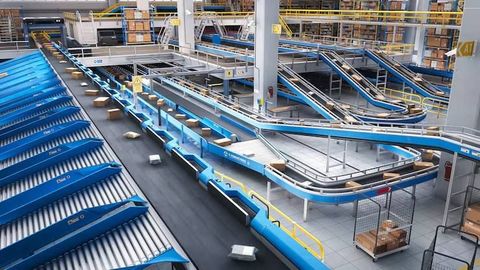
Hydraulic lifting tables provide a practical way to raise, lower, and position loads while maintaining a more controlled material handling process.
Manufacturing facilities, warehouses, assembly lines, and distribution centers use lifting equipment to improve workplace organization and reduce repetitive manual handling. As industrial operations become more focused on productivity and workplace ergonomics, selecting appropriate lifting equipment has become an important operational consideration.
Understanding hydraulic lifting tables helps businesses evaluate their capabilities, configurations, load requirements, and safety features. The right equipment can support smoother workflows while helping employees handle materials at more suitable working heights.
How Hydraulic Lifting Tables Support Material Handling Operations
A hydraulic lifting table is a mechanical platform that uses hydraulic pressure to raise and lower materials. Its operation typically involves a hydraulic cylinder, pump, lifting mechanism, platform, and control system.
When hydraulic fluid enters the cylinder under pressure, it generates the force required to move the lifting mechanism. Many industrial models use a scissor-lift arrangement, where interconnected supports extend or retract to change the platform height.
This arrangement allows operators to position materials at convenient levels for assembly, packaging, inspection, loading, or other tasks. Instead of repeatedly bending or lifting objects manually, employees can bring materials closer to their working height.
Hydraulic lifting tables are particularly useful when materials need to move between floor level and elevated workstations. Their role is not limited to lifting heavy loads; they also help organize movement between different stages of an industrial process.
Different Hydraulic Lifting Table Configurations
Hydraulic lifting tables are available in several configurations designed for different operating environments. Selecting the appropriate design requires understanding the movement pattern, available floor space, and material handling requirements.
Stationary Scissor Lift Tables
Stationary scissor lift tables are commonly installed in manufacturing facilities, warehouses, and assembly areas. They provide a fixed lifting position and can be integrated into production lines or loading stations.
Their stable platform makes them suitable for repetitive operations where materials need to be raised to a consistent working height. Businesses should evaluate platform dimensions, lifting range, and installation requirements before selecting a model.
Mobile Hydraulic Lifting Tables
Mobile lifting tables combine hydraulic lifting mechanisms with wheels or casters, allowing operators to transport materials between work areas.
These units can support equipment movement, maintenance activities, warehouse operations, and workstation replenishment. However, mobility introduces additional considerations, including wheel capacity, floor conditions, braking systems, and load stability.
Low-Profile and Specialized Lifting Tables
Low-profile lifting tables are designed for applications where materials need to be loaded from a relatively low starting height. They can be useful when handling pallets, containers, and equipment without requiring a conventional elevated loading arrangement.
Specialized configurations may also include rotating platforms, tilting mechanisms, extended platforms, or customized dimensions. These features should be selected according to the actual workflow rather than added without a clear operational requirement.
Important Specifications When Evaluating Hydraulic Lifting Equipment
Choosing a hydraulic lifting table requires more than checking its maximum lifting capacity. Different operating conditions influence how effectively and safely the equipment performs.
Specification | Why It Matters |
|---|---|
Load capacity | Determines the maximum permitted working load |
Platform dimensions | Influences the size and positioning of materials |
Minimum height | Determines loading accessibility |
Maximum lifting height | Establishes the available working elevation |
Lifting speed | Affects operational cycle time |
Hydraulic system | Influences lifting performance and maintenance requirements |
Power supply | Determines electrical installation compatibility |
Safety mechanisms | Helps protect operators during equipment operation |
Load capacity deserves particular attention. Businesses should account for the combined weight of materials, containers, fixtures, and any additional equipment placed on the platform.
Load distribution also matters. A platform may have sufficient rated capacity but still become unstable if materials are positioned unevenly or outside the manufacturer's permitted loading conditions.
Improving Workplace Ergonomics and Operational Efficiency
Hydraulic lifting tables can reduce repetitive bending, stretching, and manual repositioning during material handling activities. Maintaining materials at appropriate working heights can help employees perform tasks with less unnecessary physical strain.
In assembly environments, adjustable platform heights allow components to remain accessible during different production stages. In warehouses, lifting tables can support pallet handling and material transfer between storage and processing areas.
These improvements depend on how equipment is integrated into the workflow. A poorly positioned lifting table may introduce additional movement rather than simplify operations.
Businesses should examine material travel distances, workstation layouts, operator movements, and handling frequency before deciding where lifting equipment will provide the greatest practical value.
Safety Features and Maintenance Requirements
Hydraulic lifting tables operate with substantial mechanical forces, making proper safety measures essential. Equipment selection should consider guarding, overload protection, emergency controls, mechanical maintenance supports, and suitable operating procedures.
Safety features vary by design and manufacturer. Depending on the application, additional protection may include toe guards, safety skirts, controlled descent systems, and devices that prevent unintended platform movement.
Operators should receive appropriate training before using the equipment. Loads must remain within rated limits, and employees should never work beneath an elevated platform unless the manufacturer's specified mechanical safety supports are correctly engaged.
Regular maintenance helps identify problems before they affect equipment performance. Common inspection areas include hydraulic hoses, cylinders, seals, fluid levels, electrical controls, structural components, and moving joints.
Hydraulic leaks, unusual operating noises, inconsistent lifting, and unexpected platform movement should be investigated promptly. Maintenance schedules should follow manufacturer recommendations and applicable workplace safety requirements.
Choosing the Right Supplier and Equipment Configuration
Selecting a suitable hydraulic lifting table involves evaluating both equipment specifications and supplier capabilities. A product that meets basic lifting requirements may still be unsuitable if its dimensions, operating environment, or maintenance arrangements do not match the application.
Before evaluating suppliers, businesses should establish their expected load range, platform dimensions, lifting height, operating frequency, and installation conditions.
Technical documentation is another important consideration. Suppliers should provide relevant information about rated capacity, operating instructions, safety provisions, maintenance requirements, and applicable conformity documentation.
For specialized applications, discuss customization requirements with the manufacturer or equipment supplier. Changes to platform dimensions, lifting mechanisms, or operating controls may affect structural performance and safety.
After-sales support, replacement component availability, maintenance assistance, and warranty conditions also influence long-term equipment suitability. Comparing these factors provides a more complete basis for evaluating industrial lifting table suppliers than relying on specifications alone.
Frequently Asked Questions
What industries commonly use hydraulic lifting tables?
Manufacturing, warehousing, automotive production, packaging, logistics, and assembly operations commonly use hydraulic lifting tables for positioning and transferring materials.
How is hydraulic lifting capacity determined?
Capacity depends on the lifting mechanism, hydraulic components, structural design, and manufacturer specifications. Businesses should verify rated capacity and permitted load distribution before operation.
Are mobile hydraulic lifting tables suitable for warehouse operations?
Yes, mobile models can support material movement between workstations. Their suitability depends on load capacity, wheel design, braking arrangements, floor conditions, and movement requirements.
What maintenance does a hydraulic lifting table require?
Typical maintenance includes inspecting hydraulic hoses, checking fluid levels, examining cylinders and seals, testing controls, and inspecting structural components. Follow the manufacturer's maintenance schedule.
Can hydraulic lifting tables be customized?
Many manufacturers offer application-specific configurations, including different platform dimensions, lifting heights, and specialized operating features. Customization should be based on documented load and safety requirements.
Conclusion
Hydraulic lifting tables provide practical support for material positioning, workplace ergonomics, and industrial handling operations. Their effectiveness depends on selecting suitable configurations, understanding load requirements, and maintaining appropriate safety procedures.
By evaluating equipment specifications, operating conditions, supplier capabilities, and maintenance needs, businesses can identify lifting solutions that support reliable material handling and more organized industrial workflows.