Wire Mesh Conveyor Belt: Explore Designs for Industrial Material Handling
Wire mesh conveyor belts play a practical role in industrial environments where materials need to move continuously through production, processing, cooling, washing, drying, or inspection stages.
Their open construction allows air, liquids, and heat to pass through the belt while products remain supported during transport.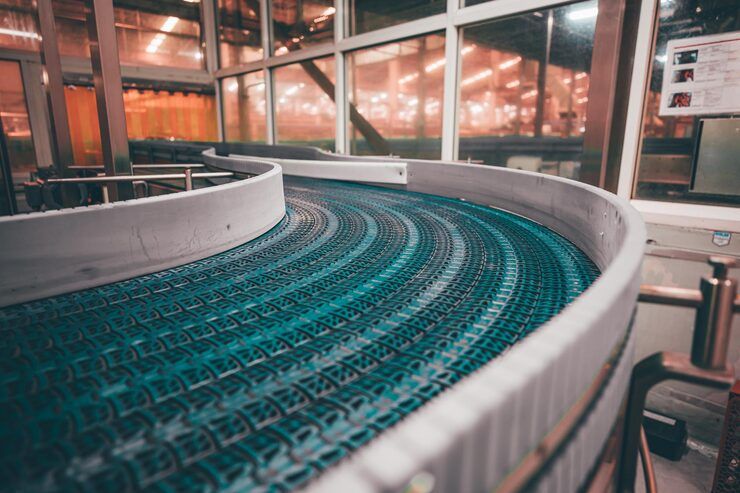
The design of a wire mesh conveyor belt can vary considerably depending on the material being handled and the operating conditions. Belt opening, wire diameter, weave pattern, strength, temperature resistance, and conveyor configuration all influence how the system performs.
Understanding these design factors helps manufacturers and engineers select a conveyor arrangement that fits the process rather than treating the belt as a simple moving surface. The right combination of belt construction and conveyor design can improve material flow, product handling, cleaning, and process consistency.
How Wire Mesh Conveyor Belts Are Built
A wire mesh conveyor belt consists of interconnected metal wires formed into a continuous conveying surface. Unlike solid conveyor belts, its open structure creates spaces between the wires that can be useful for thermal processing, washing, filtration, and drainage.
The belt is typically constructed from metal selected according to the operating environment. Stainless steel is common where corrosion resistance, cleanliness, or elevated temperatures are important. Other metals may be used when the application requires particular mechanical or thermal characteristics.
The belt design also determines how products interact with the conveying surface. Fine mesh can support smaller items, while larger openings may provide better airflow or drainage for applications involving heat or liquids.
The belt is normally supported by sprockets, rollers, or other conveyor components. Proper engagement between the belt and drive system is essential for stable movement and consistent tracking.
Choosing the Right Mesh Pattern
Mesh pattern is one of the defining characteristics of a wire conveyor belt. Different patterns provide different combinations of support, flexibility, opening area, and mechanical strength.
Balanced weave designs are commonly used where a combination of stability and flexibility is required. Compound weave configurations can provide a relatively dense conveying surface while maintaining the open characteristics associated with mesh belts.
Chain-driven mesh belts may use edge chains or other drive arrangements to transfer motion from the conveyor drive to the belt. The choice depends on belt width, load, operating temperature, speed, and the physical characteristics of the conveyed material.
The opening size should also match the product. If openings are too large, small components may become unstable or fall through the belt. If the mesh is unnecessarily fine, airflow and drainage can be reduced.
Why Material Selection Matters
The operating environment often determines which wire material is appropriate. A conveyor transporting dry components in a moderate-temperature environment has different requirements from one operating inside a high-temperature furnace or washing system.
Stainless steel is widely used because it combines mechanical strength with corrosion resistance. Different stainless-steel grades can provide different levels of resistance to heat, moisture, chemicals, and corrosive environments.
Material selection should also consider repeated heating and cooling. Thermal cycling can affect dimensions and mechanical behavior, particularly in applications where the belt repeatedly enters and exits high-temperature zones.
For food and other hygiene-sensitive applications, the belt construction should also support effective cleaning and meet the applicable requirements of the production environment.
Matching Belt Design to the Material
The material being transported has a direct influence on belt configuration.
Small components may require a fine mesh to prevent instability or loss through the belt openings. Larger parts can generally tolerate more open constructions, particularly when airflow or drainage is an important part of the process.
Fragile products require careful consideration of contact points and belt movement. Excessive vibration, abrupt transfers, or an unsuitable mesh pattern can affect product quality even when the conveyor itself operates reliably.
Heavy or abrasive materials create different demands. The belt needs sufficient mechanical strength and appropriate support to prevent excessive deformation during continuous operation.
For this reason, belt selection should consider more than dimensions alone. Product geometry, weight, temperature, surface characteristics, and handling sensitivity all influence the appropriate design.
Where Open-Mesh Conveyors Are Especially Useful
The open structure of wire mesh belts makes them particularly suitable for processes where the product must be exposed to air, heat, water, or other process media.
Common applications include:
- Heat treatment and furnace conveying
- Food processing and baking
- Washing and cleaning systems
- Drying and cooling operations
- Coating and finishing processes
- Parts cleaning and surface treatment
- Freezing and thermal processing
- Industrial inspection and transfer systems
In thermal applications, the open belt allows heat to reach the product more evenly than a solid conveying surface may allow. In washing or cleaning systems, openings allow water and cleaning fluids to pass through rather than accumulating on the belt surface.
The actual belt construction still needs to be matched to the process. A belt suitable for moderate-temperature food processing may not be appropriate for a high-temperature industrial furnace.
Conveyor Design Goes Beyond the Belt
A wire mesh belt is only one component of the complete conveying system. The conveyor frame, drive system, support arrangement, sprockets, rollers, tensioning mechanism, and transfer points all influence performance.
Belt tension must remain within an appropriate operating range. Excessive tension can increase mechanical stress, while insufficient tension can contribute to tracking problems or inconsistent movement.
Support spacing is also important, especially with wider belts or heavier loads. If the belt is inadequately supported, deflection can increase and may affect product stability.
The drive system must provide enough torque to move the belt and its load under actual operating conditions. Start-up conditions can be particularly demanding when the conveyor is heavily loaded.
Temperature Changes and Thermal Processing
High-temperature conveyor applications introduce design considerations that are less significant in ordinary material handling.
As metal heats, it expands. A belt operating through a furnace or other heated zone therefore needs a design that accommodates dimensional changes without creating excessive stress.
Temperature can also affect lubrication requirements, support components, drive elements, and surrounding conveyor structures. The belt material itself must remain mechanically suitable for the intended operating range.
Cooling processes create another type of thermal transition. Rapid changes between hot and cool environments can contribute to repeated expansion and contraction, making material selection and belt construction particularly important.
Maintenance and Operating Reliability
Even a well-designed wire mesh conveyor requires routine inspection. Because the belt operates continuously under mechanical load, small issues can develop into larger problems if they are overlooked.
Operators may monitor the belt for broken or distorted wires, damaged edges, unusual tracking, excessive wear, and changes in tension. Drive components and supporting elements also need periodic inspection.
Cleaning is particularly important in applications involving food, chemicals, coatings, or materials that can accumulate on the belt. The open structure generally helps with drainage and access, but the specific belt pattern still affects how easily residues can be removed.
Correct installation also matters. Misalignment, incorrect tension, or unsuitable support arrangements can shorten belt life and create inconsistent product movement.
Designing for Efficient Material Handling
An effective wire mesh conveyor system is designed around the entire production process rather than around the belt alone.
Engineers typically consider:
- Product dimensions and weight
- Required conveying speed
- Operating temperature
- Belt width and length
- Mesh opening and wire diameter
- Load distribution
- Cleaning requirements
- Drive and support configuration
- Transfer points
- Environmental exposure
These factors interact with one another. Increasing belt speed, for example, may affect product stability and transfer behavior. Changing the mesh opening can alter support characteristics, airflow, and drainage.
A well-integrated design therefore balances mechanical performance with the needs of the process. The objective is consistent movement without creating unnecessary stress on the belt, product, or conveyor equipment.
How Modern Designs Improve Process Control
Modern industrial conveyor systems increasingly incorporate sensors, automated controls, variable-speed drives, and condition-monitoring technologies. These systems can help operators maintain more consistent conveying conditions across different production stages.
Variable-speed control allows conveyor movement to be adjusted according to production requirements. Sensors can also help detect belt movement, product accumulation, or other operating conditions that require attention.
For larger automated facilities, connecting conveyor controls with broader production systems can improve coordination between processing stages. The wire mesh belt remains a mechanical component, but its performance can become part of a more integrated material-handling system.
Frequently Asked Questions
What is a wire mesh conveyor belt used for?
A wire mesh conveyor belt is used to move materials through industrial processes where airflow, drainage, heating, cooling, washing, or drying is required. It is common in food processing, thermal treatment, cleaning, and manufacturing applications.
Why are stainless steel wire mesh belts widely used?
Stainless steel provides a useful combination of strength, corrosion resistance, and temperature performance. The appropriate grade depends on the operating environment and process requirements.
How do I choose the right mesh opening?
The opening should match the size and stability requirements of the conveyed product. Smaller products generally require finer mesh, while larger openings can improve airflow or drainage when product support remains adequate.
Can wire mesh conveyor belts operate at high temperatures?
Yes, specific metal belt designs are used for high-temperature applications. The belt material, construction, conveyor supports, drive components, and thermal expansion characteristics all need to match the operating conditions.
What maintenance does a wire mesh conveyor belt require?
Routine maintenance can include inspecting the mesh for damage, checking alignment and tension, examining drive components, cleaning the conveying surface, and monitoring unusual movement or wear.
Conclusion
Wire mesh conveyor belts are engineered material-handling components designed to perform under specific mechanical, thermal, and environmental conditions. Their open construction makes them particularly useful when products need exposure to heat, air, water, or cleaning processes during transportation.
The most suitable design depends on the interaction between the belt, product, conveyor structure, drive system, and operating environment. By considering mesh pattern, material, load, temperature, support, and maintenance requirements together, industrial facilities can create conveyor systems that provide stable and consistent material movement.

Related Post...
Hazardous Chemical Bulk Transportation: Explore Safe Cargo Handling Procedures
Updated: October 01, 2026
Read More
Intermodal Freight Transportation Operations: Explore How Cargo Moves Across Modes
Updated: October 01, 2026
Read More
Last-Mile B2B Delivery Fleet Operations: Explore How Routes Are Coordinated
Updated: October 01, 2026
Read More