Corporate Water Filtration Infrastructure: A Guide to System Design
Water is a critical input in many corporate and industrial facilities. It supports drinking water systems, cooling equipment, manufacturing processes, laboratories, food production, and building operations. When water quality varies, filtration infrastructure must be designed around the specific demands of each application.
Corporate water filtration infrastructure brings together treatment equipment, distribution networks, monitoring systems, and maintenance procedures. The objective is not simply to remove visible impurities, but to deliver water that meets defined quality requirements consistently.
Effective system design begins with understanding the source water, intended use, and operational constraints. It then connects treatment stages, capacity planning, safety controls, and ongoing monitoring into a coordinated system.
Begin With Water Quality and End-Use Requirements
The first design decision is determining what the water must achieve. Municipal water, groundwater, rainwater, and recycled process water can have very different characteristics. Even within one facility, water intended for drinking may require a different treatment approach from water used in cooling towers or manufacturing.
A water quality assessment should examine available laboratory data and identify relevant parameters such as turbidity, suspended solids, hardness, dissolved minerals, microbial indicators, and specific contaminants. The actual requirements depend on the source and intended application.
For example, a facility may need particulate filtration for general building water, while a laboratory or specialized production process may require additional treatment stages. Designing around assumptions can lead to unnecessary equipment or inadequate protection.
The design brief should establish:
Source water characteristics: Quality, variability, seasonal changes, and available supply.
Intended uses: Potable water, process water, cooling, cleaning, or other applications.
Required quality: Applicable standards, process specifications, and internal quality targets.
Demand profile: Average use, peak flow, operating hours, and future expansion.
Operational constraints: Available space, power, drainage, access, and maintenance requirements.
This information provides the foundation for selecting appropriate treatment technologies.
Build a Treatment Train That Matches the Application
Most corporate water filtration systems use a sequence of treatment stages rather than one device. Each stage addresses a particular water quality issue, and the arrangement depends on the source and final requirements.
A common system may include pretreatment, sediment filtration, activated carbon, softening, membrane treatment, or disinfection. Not every facility needs all of these stages.
Pretreatment and Sediment Removal
Pretreatment protects downstream equipment by removing larger particles and reducing the load on finer filters. Screens, strainers, and sediment filters may be used depending on the source water.
Sediment filtration is particularly relevant where suspended solids could interfere with valves, pumps, membranes, or heat-transfer equipment. Filter selection should account for particle size, flow rate, and the expected level of contamination.
Activated Carbon and Specialized Treatment
Activated carbon can reduce certain organic compounds, chlorine, and taste- or odor-related substances. It is often used when these characteristics affect water quality or downstream treatment.
Where dissolved minerals, hardness, or specific contaminants require control, additional technologies may be appropriate. Water softeners, ion exchange, ultrafiltration, reverse osmosis, and other treatment methods address different problems. The correct choice depends on water chemistry and the required output.
A treatment train should be designed as a coordinated process. Adding equipment without understanding its purpose can increase complexity without improving the final water quality.
Size Capacity Around Real Operating Conditions
System capacity must reflect how water is actually used. Average daily consumption alone is not enough because corporate facilities often experience significant fluctuations during shifts, production cycles, cleaning operations, or peak occupancy.
Designers should consider:
Average and peak flow rates
Required operating pressure
Storage capacity
Simultaneous demand from multiple areas
Filter loading and replacement intervals
Future expansion
Redundancy for critical applications
A system operating near its maximum capacity for long periods may experience pressure drops, reduced treatment performance, or more frequent maintenance. Oversizing, however, can create its own problems, including inefficient operation and extended water residence time.
For critical facilities, parallel treatment trains may allow one unit to remain operational while another undergoes maintenance. This approach can improve continuity without requiring the entire system to shut down.
Integrate Storage, Distribution, and Pressure Management
Filtration equipment is only one part of the infrastructure. Treated water must be stored, distributed, and delivered at suitable pressure to the points of use.
Storage tanks can help balance fluctuating demand and provide operational flexibility. Their design should consider material compatibility, access for inspection, cleaning requirements, and protection against contamination.
The distribution network should be reviewed for pipe sizing, pressure losses, dead-end sections, flow direction, and cross-connection risks. Poorly designed distribution can undermine water quality even when the treatment equipment performs correctly.
Where different water grades are used, the system should maintain clear separation between potable, process, reclaimed, and other non-potable supplies. Appropriate labeling, backflow prevention, and documented connection controls help reduce the risk of unintended mixing.
Include Monitoring and Control Systems
Water filtration infrastructure requires monitoring because source conditions and operating performance can change over time. A system that works well during commissioning may require adjustment as filters load, water chemistry shifts, or demand increases.
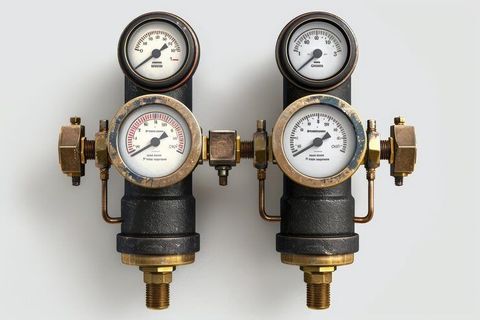
Monitoring may include pressure gauges, flow meters, conductivity measurements, turbidity checks, chlorine monitoring, or other parameters relevant to the treatment process. The selected instruments should reflect the risks and performance requirements of the system.
Automated controls can support consistent operation by managing pump sequences, filter backwashing, alarms, and treatment stages. However, automation does not eliminate the need for human oversight. Operators still need clear procedures for interpreting readings and responding to abnormal conditions.
Monitoring records also help identify trends. A gradual increase in pressure differential across a filter, for example, may indicate loading before performance is visibly affected.
Design for Maintenance, Safety, and Compliance
Maintenance requirements should be considered before equipment is installed. Filters, membranes, pumps, valves, and dosing systems need accessible inspection points and sufficient clearance for replacement or repair.
A practical maintenance plan should define inspection intervals, consumable replacement, cleaning procedures, calibration, and documentation. Equipment that is difficult to access may be neglected, reducing system reliability over time.
Safety considerations include chemical handling, electrical protection, confined spaces, pressure vessels, and emergency access. Where disinfection chemicals or treatment additives are used, storage and handling arrangements must follow applicable requirements.
Compliance depends on the application and jurisdiction. Drinking water systems may need to meet local public health regulations, while industrial facilities may also need to address wastewater discharge, chemical management, and environmental requirements. Standards such as NSF/ANSI 42, NSF/ANSI 53, and NSF/ANSI 58 may be relevant to particular treatment components, but their applicability depends on the equipment and intended use.
Consider Sustainability and Lifecycle Performance
Water filtration design should account for more than initial installation. Energy consumption, water losses, replacement materials, chemical use, and equipment lifespan all influence the system’s environmental and operational performance.
Reverse osmosis systems, for example, produce a concentrated reject stream that requires appropriate management. Backwashing filters also consume water, while pumps contribute to energy demand. These factors should be evaluated during design rather than after commissioning.
Lifecycle planning can include:
Selecting equipment appropriate to the actual water quality
Reducing unnecessary treatment stages
Optimizing pump operation
Managing backwash and reject water
Choosing durable, maintainable components
Tracking water and energy performance
The objective is to balance treatment effectiveness with responsible resource use. A technically sophisticated system is not automatically efficient if it is poorly matched to the application.
Use a Phased Design and Commissioning Process
A corporate water filtration project benefits from a structured progression from assessment to operation. Early decisions should be supported by water testing, demand analysis, and a clear understanding of the facility’s needs.
The process commonly includes:
Assess source water and intended uses.
Define quality targets and applicable requirements.
Select treatment stages and preliminary equipment.
Calculate capacity, storage, pressure, and redundancy.
Develop the distribution and control design.
Review safety, maintenance, and environmental considerations.
Commission the system and verify performance.
Establish monitoring and maintenance procedures.
Commissioning should confirm that the system operates as intended under realistic conditions. Performance verification may include flow testing, pressure checks, water quality sampling, alarm testing, and review of treatment settings.
Frequently Asked Questions
What is corporate water filtration infrastructure?
It is the integrated network of treatment equipment, storage, distribution, monitoring, and maintenance systems used to provide water that meets a facility’s operational and quality requirements.
How is a filtration system selected for a corporate facility?
Selection begins with source water analysis and the intended use of the treated water. Designers then choose treatment stages based on contaminants, flow requirements, quality targets, and operating conditions.
Does every corporate facility need reverse osmosis?
No. Reverse osmosis is appropriate for certain water quality requirements, but many facilities can meet their needs through simpler filtration or other treatment technologies.
Why is redundancy important in water treatment design?
Redundancy can allow critical operations to continue while one treatment unit is being inspected, cleaned, or repaired. Its necessity depends on the facility’s water requirements and tolerance for interruption.
How often should filtration equipment be maintained?
Maintenance intervals depend on water quality, equipment type, operating hours, and manufacturer requirements. Monitoring pressure, flow, and water quality helps determine when inspection or replacement is needed.
Conclusion
Corporate water filtration infrastructure should be designed as a complete water management system rather than a collection of individual filters. Source quality, end-use requirements, capacity, distribution, monitoring, safety, and maintenance all influence performance.
A well-planned system matches treatment technology to actual needs, supports reliable operation, and remains practical to maintain. By combining water analysis with careful engineering and ongoing performance verification, corporate facilities can develop filtration infrastructure that is effective, adaptable, and operationally responsible.

Related Post...
Commercial HVAC Infrastructure Upgrades: Explore Modern System Design and Planning
Updated: September 16, 2026
Read More
High-Ticket Event Audiovisual Production Infrastructure: Discover Production Workflow Details
Updated: September 16, 2026
Read More
Business Event Destination Infrastructure: Explore Venue Planning Essentials
Updated: September 16, 2026
Read More