Commercial Battery Storage Systems: Explore How Factory Energy Storage Works
Factories depend on a reliable supply of electricity to keep production lines, automated machinery, refrigeration equipment, and industrial control systems operating smoothly.
Commercial battery storage systems help industrial facilities manage this demand by storing electrical energy and releasing it when operations require additional power.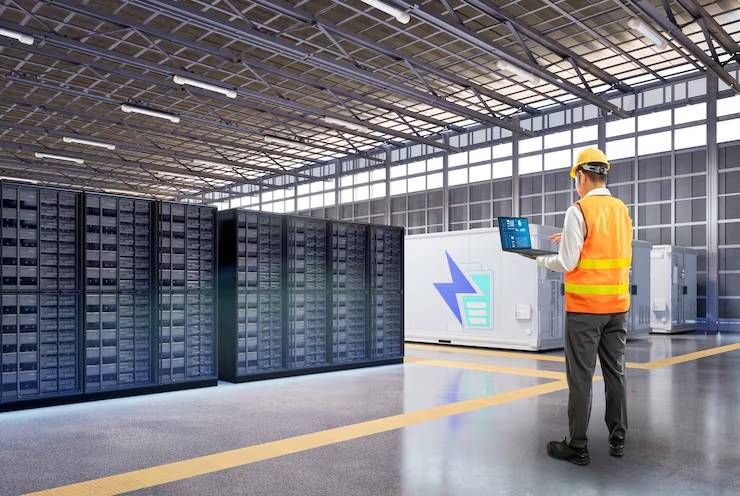
As factories adopt renewable energy, electrified equipment, and increasingly automated production processes, managing electricity demand has become an important part of facility planning. Battery storage provides another way to coordinate energy consumption, particularly when electricity demand fluctuates throughout the day or solar generation varies with weather conditions.
Understanding how factory energy storage works involves more than examining the batteries themselves. The complete system includes power conversion equipment, energy management software, electrical protection, thermal management, and controls that determine when stored electricity should be used.
How Factory Battery Energy Storage Works
A commercial battery energy storage system, commonly called a BESS, stores electrical energy in rechargeable batteries for later use. In a factory, the system connects to the facility's electrical infrastructure and operates according to defined power requirements, operating schedules, and energy management settings.
During charging, electricity flows into the battery and is converted into chemical energy. When the factory needs that stored energy, the battery releases electricity through power conversion equipment so it can be used by compatible electrical loads.
The system may charge from the utility grid, on-site solar generation, or another permitted electrical source. Its controls determine when charging and discharging should occur, subject to battery limits, facility requirements, and grid connection rules.
Unlike a standby generator, which produces electricity from fuel, a battery storage system primarily shifts electricity from one period to another. It does not independently create energy, and some energy is lost during charging, storage, and discharge.
The Main Components Inside an Industrial Storage System
A factory battery installation combines several components that must operate together. Battery capacity alone does not determine how well the installation supports production.
Battery modules and racks contain the electrochemical cells that store energy. Multiple modules are assembled into larger units to provide the required capacity and electrical configuration.
The battery management system (BMS) monitors cell voltage, temperature, current, and other operating parameters. It helps keep the battery within permitted limits and can initiate protective actions when abnormal conditions occur.
The power conversion system (PCS) converts direct current from the battery into alternating current for compatible factory electrical equipment. It also controls the flow of electricity during charging and discharging.
The energy management system (EMS) coordinates the installation's operating strategy. Depending on its configuration, it can use production schedules, electricity tariffs, solar output, and measured electrical demand to determine when the battery should charge or discharge.
Additional equipment may include transformers, switchgear, protective relays, cooling systems, fire detection equipment, and communications hardware. Their specifications depend on the installation's size, chemistry, location, and electrical design.
Why Battery Chemistry Matters
Battery chemistry affects energy density, cycle life, operating temperature, charging behavior, and safety requirements. Industrial storage projects therefore need to match the selected technology to the factory's operating conditions rather than choosing a battery solely by its rated capacity.
Lithium iron phosphate, commonly abbreviated as LFP, is widely used in stationary storage because of its thermal stability characteristics and suitability for repeated cycling. Other lithium-ion chemistries may be selected for applications with different performance requirements.
Lead-acid batteries remain relevant in some established backup applications, although their characteristics differ from those of modern lithium-ion storage systems. Flow batteries are another option, particularly where project requirements make their separate energy-storage tanks and power-conversion components suitable.
Each technology has different requirements for installation, monitoring, maintenance, and end-of-life handling. The complete system design must account for usable energy, power output, expected cycling, environmental conditions, and the manufacturer's operating limits.
How Battery Storage Manages Factory Electricity Demand
One major application is demand management. Factories often experience short periods when several energy-intensive machines operate simultaneously, creating peaks in electricity consumption.
A properly configured battery system can discharge during these periods and reduce the amount of power drawn from the grid. This is commonly called peak shaving. Whether it produces a financial benefit depends on the facility's electricity tariff, demand charges, operating schedule, and system performance.
Battery storage can also shift energy consumption between different periods. For example, a factory may charge the battery when electricity is relatively inexpensive and use the stored energy during a more expensive period, provided the tariff structure and system efficiency make this approach worthwhile.
However, these operating strategies require careful planning. If the battery is discharged too early, it may not have enough remaining energy to support a later demand peak. The EMS must balance immediate requirements against expected conditions over the rest of the operating period.
Integrating Battery Storage With Factory Solar Power
Factories with rooftop or ground-mounted solar installations can use battery storage to coordinate electricity generation with production demand. Solar panels may generate substantial power during daylight hours, while a facility's electricity consumption can continue into the evening or fluctuate with production activity.
When solar generation exceeds immediate demand, a battery may store some of the surplus electricity. The stored energy can then support factory loads when solar output falls, reducing the need to draw as much electricity from the grid.
The amount of energy that can be shifted depends on solar generation, battery capacity, charging power, discharge limits, and the facility's consumption profile. A battery that is too small may fill quickly during periods of high solar output, while a larger system may remain underused if the factory has little demand outside daylight hours.
Solar integration also requires compatible electrical controls and appropriate protection. Grid-connected installations must follow applicable interconnection requirements, and they need a clear operating strategy for periods when solar generation, battery output, and factory demand change simultaneously.
Backup Power and Production Continuity
Battery storage can help maintain selected factory operations during a grid interruption, but backup capability is not automatic. A standard grid-connected system may shut down during an outage to prevent electricity from feeding into a network that utility personnel may be repairing.
To supply power during an outage, the installation generally needs suitable islanding controls, switching equipment, protection, and an inverter capable of supporting the intended operating mode. The electrical design must also account for the high starting current that some motors and industrial machines require.
Facilities often prioritize critical loads rather than attempting to power the entire factory. These may include control systems, essential lighting, communications equipment, selected pumps, or other processes that need uninterrupted or short-duration support.
Backup duration depends on usable battery energy and the connected load. For example, a system with 500 kWh of usable energy could theoretically supply a constant 100 kW load for five hours before accounting for conversion losses, reserve limits, and other operating constraints. Actual runtime would therefore be shorter under those conditions.
Planning Battery Capacity for Industrial Operations
Selecting the right system requires two related measurements: energy capacity and power capability.
Energy capacity, measured in kilowatt-hours or megawatt-hours, indicates how much electricity the battery can store. Power capability, measured in kilowatts or megawatts, indicates how much electricity it can deliver at a given moment.
A factory that needs high power for short periods may require a different configuration from a facility that needs a moderate amount of power for several hours. Both the duration and intensity of the electrical demand influence the design.
Engineers typically examine interval-based electricity consumption data, peak demand, production schedules, tariff structures, planned expansion, and critical-load requirements. They also account for round-trip efficiency, degradation over time, reserve capacity, and the battery's permitted depth of discharge.
This assessment helps prevent two common design problems: installing insufficient capacity to meet operational requirements or installing a system that remains underutilized for much of its service life.
Safety, Monitoring, and Long-Term Maintenance
Industrial battery installations require coordinated electrical, mechanical, and fire-safety planning. Potential hazards include electrical faults, overheating, damaged cells, and thermal runaway in susceptible battery technologies.
Appropriate safeguards can include temperature monitoring, overcurrent protection, fault isolation, ventilation or thermal management, emergency shutdown procedures, and fire detection or suppression measures selected for the installation. Applicable building codes, electrical standards, fire codes, and local authority requirements must be considered during design and commissioning.
Routine monitoring helps identify unusual temperatures, unexpected energy losses, communication failures, and changes in battery performance. Maintenance requirements vary by technology and equipment configuration, so inspection schedules should follow manufacturer instructions and the facility's maintenance procedures.
Operational planning is equally important. Staff need to understand alarm responses, emergency isolation procedures, and the circumstances under which the battery should be taken out of service.
Frequently Asked Questions
Can a factory battery storage system reduce electricity demand charges?
Yes, it can reduce measured peak demand when configured to discharge during relevant demand periods. The actual effect depends on the facility's tariff, load profile, battery power, available energy, and control strategy.
How long can industrial battery storage supply electricity?
Runtime depends on usable battery capacity and the connected load. A larger energy capacity can support a given load for longer, but conversion losses and operating reserves reduce the energy available to equipment.
Can battery storage work with rooftop solar panels?
Yes. A compatible system can store surplus solar generation and release it when factory demand exceeds available solar output. The result depends on system capacity, solar production, and the timing of electricity consumption.
Does battery storage keep an entire factory running during a power outage?
Not necessarily. Backup operation requires suitable equipment and electrical controls. Many installations are designed to supply selected critical loads rather than the entire facility.
Which battery technology is used for commercial energy storage?
Lithium-ion batteries, particularly LFP systems, are widely used in stationary storage. Other technologies may suit particular applications, depending on performance requirements, operating conditions, safety considerations, and system design.
Conclusion
Commercial battery storage systems help factories manage electricity demand, coordinate renewable generation, and support selected loads during power interruptions when the installation is designed for backup operation. Their performance depends on the interaction between battery chemistry, usable capacity, power conversion, control software, and factory operating patterns.
A successful installation begins with a clear understanding of the facility's energy requirements. By matching system capabilities to actual electrical demand and maintaining appropriate safety controls, industrial facilities can integrate battery storage into their broader energy management strategy.

Related Post...

Cloud Call Center Systems: Explore How Cloud-Based Communication Works
Updated: October 02, 2026
Read More
WhatsApp Business API Automation Platforms: Discover How Integrations Work
Updated: September 09, 2026
Read More
Industrial Fire Suppression System Inspection: A Guide to Equipment Readiness
Updated: October 02, 2026
Read More